


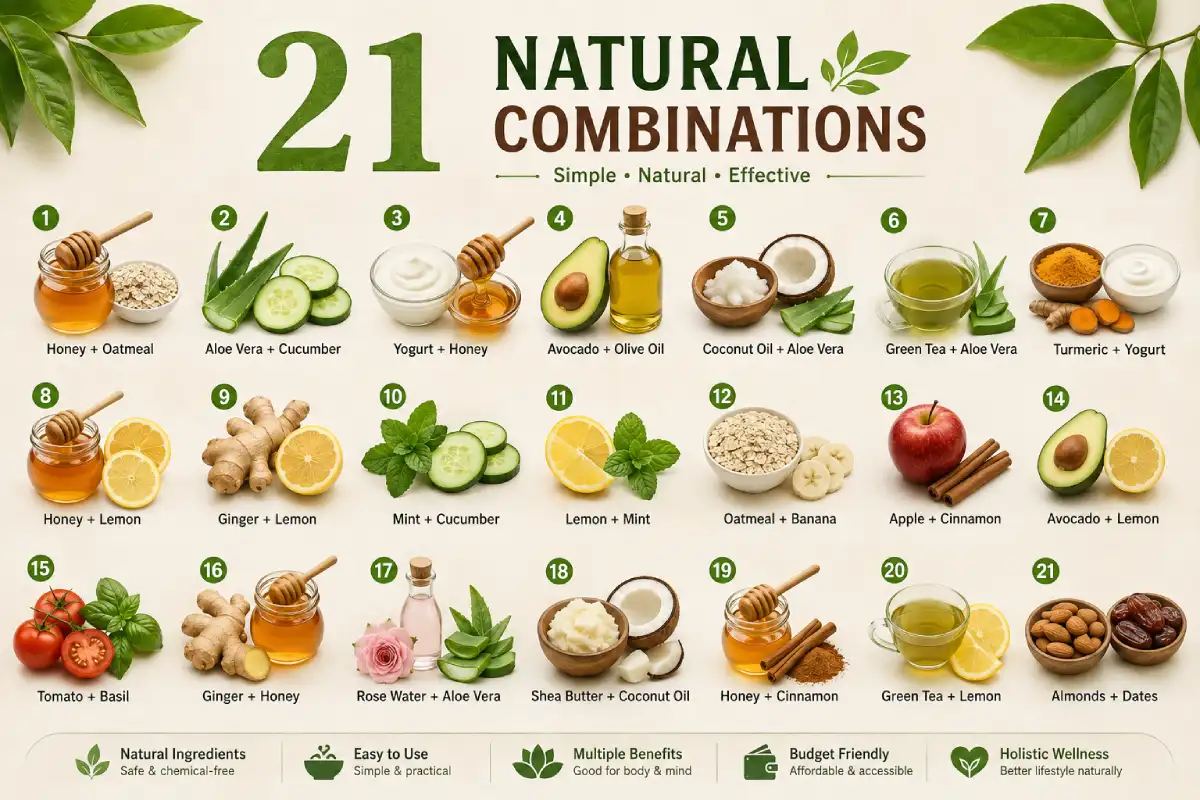


Natural Combinations for Simple Self-Care. There has been an increase in people opting for natural blends, whether this is for hair products or skincare, drinks, food, or simply general well-being and self-care. Typically, all combinations involve the use of combining two or more complementary natural products for practical use. ‘Natural’ is only natural if you use it the right way, as not all natural products are good for the body.
Natural ingredients can cause allergies, irritation, dryness, and many other reactions in some people.
In this guide, we share 21 natural combinations with a brief explanation of what makes pairs desirable.
Table of Contents
What Are Natural Combinations?
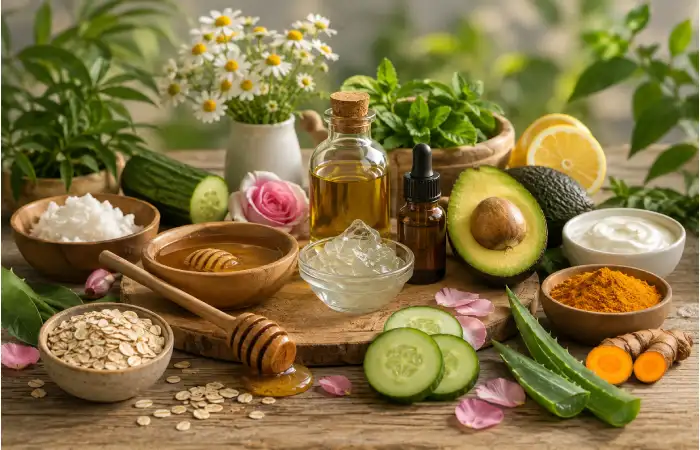
A natural combination is one of a nature between two ingredients in which the ingredients combine as a result of their distinct properties complementing each other. E.g., honey and Oatmeal in gentle facial masks, because the Oatmeal is soothes while Honey retains and draws moisture. Cooling treatments benefit from combining Aloe Vera with Cucumber.
It is about quality, not quantity in combination – two or three simple ingredient products are simpler for the customer than a long list mixture.
A good natural combination should perform clear functions, such as one hydrates, the other soothes, and the third benefits from the texture or experience.
1. Honey and Oatmeal
Natural Beauty: Honey & Oatmeal Mask | Recipes: What’s Available Honey and oatmeal are a classic and super gentle blend to use on the skin. Honey is a natural humectant, so it’s very effective at drawing in moisture. Oatmeal is soothing, conditioning, and most effective when colloidal.
Combined, these work into a fantastic moisturizer to help with dry, uncomfortable skin.
For sensitive skin, use the base mixture ONLY (don’t add lemon juice, baking soda, etc.
2. Aloe Vera and Cucumber
Naturally good for everyone and recognized for this is the refreshing/cool effect both Aloe Vera and the Cucumber give off. A thin layer of hydration, adding aloe vera gel to the skin, and the cucumber, having a large amount of water within, when it’s placed on skin, are great for summer skin. A nice, easy alternative for the Aloe Vera should be purchased in case one does not like extremely perfumed/alcohol enhanced brands.
3. Yogurt and Honey
Yogurt and honey can make a simple at-home cream. Plain yogurt includes lactic acid, an AHA that offers the mildest exfoliation, as well as honey, which offers hydrating benefits. Because lactic acid exfoliates, don’t assume this combination is part of an all-in-one everyday mask for all skin types, and sensitive skin types can get red. Do a patch test before using it.
4. Avocado and Olive Oil
Avocado and olive oil both possess similar properties of richness and emollience. Skin emollients fill any holes between skin cells to condition and soften skin. Avocado combined with olive oil, commonly seen in homemade hair masks and body care treatments, provides deep nourishment and a soft texture to the body; it might be a little rich for oily or acne-prone skin, particularly if you use this concoction on your face.
5. Coconut Oil and Aloe Vera
You can easily combine aloe vera (the thin, water-like one!) and coconut oil to add softness. A very oil-based coconut oil and water-based aloe vera combo would likely feel good to skin that’s thirsty. But since I have many issues and sometimes get zits, pure coconut oil is a bit much for my face and better for my hands or elbows.
6. Green Tea and Aloe Vera
For a refreshing skin rinse, green tea and aloe Vera are a wonderful combo. Green tea itself has polyphenols in it, antioxidants that are naturally in tea. Aloe vera can add a bit of non-greasy moisture. A nice cool rinse with some green tea and aloe Vera feels fantastic after a day of sweating profusely in the sun.
Don’t use these mixes on cuts and broken skin.
7. Turmeric and Yogurt
When you combine turmeric and yogurt, it works well as a home remedy. The compound known as curcumin is naturally present in turmeric and has long been believed to have beneficial qualities that have demonstrated both anti-inflammatory and antioxidant effects; yogurt has been packed with these ingredients to provide hydration to the skin and lactic acid to exfoliate. The key word to use here is small. Turmeric can stain your skin, clothes, and yogurt can sting if you have sensitive skin.
A small spot test is highly advised for these ingredients.
8. Honey and Lemon
This natural honey and lemon combination should be a pleasant match; you know, in your favorite drink and folk medicine, for example, honey gives you sweetness and moisture; the lemon gives you vitamin C and the citrus taste. For your skin, on the other hand, lemon can damage you because lemon can cause a light reaction, which make you skin more sensitive to light.
9. Ginger and Lemon
Ginger and lemon make for a great combo for a drink.
>Ginger has that warm, zingy effect, while lemons add acidity and a punch of refreshment. Couple it with hot water, and it becomes an even simpler drink to make. The drink is also enjoyed just because it’s bright and bubbly and will awaken you during the morning, even in cooler weather. Individuals sensitive to certain food and/or liquid elements will tend to find large amounts of ginger and acidity to be somewhat irritating, though
10. Mint and Cucumber
Cucumber and mint practically go hand in hand for the summertime. Cucumber brings that subtle water flavor; mint brings the cool aroma and flavor. Pour some cool water and toss in a few slices of cucumber and some fresh mint. An infinitely more interesting way to experience plain water without all of the sugar.
Natural Combination Comparison Table
| Natural combination | Common use | Main appeal | Important consideration |
| Honey + Oatmeal | Skincare | Moisturizing and soothing | Patch test first |
| Aloe Vera + Cucumber | Skincare | Refreshing hydration | Use clean ingredients |
| Yogurt + Honey | Skincare | Moisture and mild exfoliation | May irritate sensitive skin |
| Avocado + Olive Oil | Hair/body care | Rich and conditioning | Can feel heavy |
| Coconut Oil + Aloe Vera | Body care | Softening and hydration | Coconut oil may clog pores |
| Green Tea + Aloe Vera | Skincare | Refreshing and antioxidant-rich | Avoid broken skin |
| Turmeric + Yogurt | Skincare | Traditional beauty use | Can stain or irritate |
| Ginger + Lemon | Drinks | Bright, warming flavor | May bother sensitive stomachs |
| Mint + Cucumber | Drinks | Fresh and cooling | Best consumed fresh |
| Apple + Cinnamon | Food | Naturally sweet flavor | Cinnamon should be used moderately |
| Avocado + Lemon | Food | Creamy and bright | Avocado is calorie-dense |
| Tomato + Basil | Food | Fresh, aromatic flavor | Best prepared fresh |
| Ginger + Honey | Drinks | Sweet and spicy | Honey is unsuitable for infants |
| Rose Water + Aloe Vera | Skincare | Light, refreshing feel | Fragrance may irritate |
| Shea Butter + Coconut Oil | Body care | Rich moisturization | May be too heavy for face |
| Almonds + Dates | Snack | Sweet, filling combination | Watch portion size |
How to Choose the Right Natural Combination
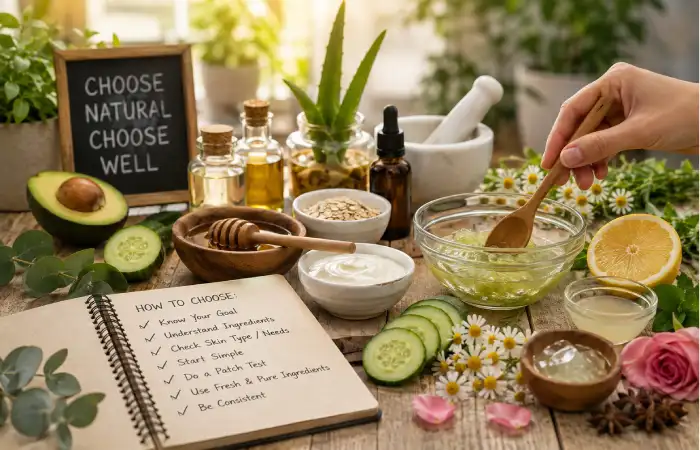
The key to your natural combo lies in what you want to accomplish rather than the specific ingredients involved. Hydration relies on ingredients that either hold onto or lock in water (i.e., aloe and honey) and works well, whereas for deeper moisturizing, certain oils and butters would take precedence over water-holding and locking ingredients. For food and drink, focus on balance between your naturally sweet (tart, sharp, crisp, or textural) ingredient and your additional, balanced flavorings.
And above all: Don’t fall into the trap that two naturally created ingredients combined automatically elevate each one. Oftentimes, a simple equation works best.
Natural Does Not Always Mean Risk-Free
Natural can give a false impression of safety.
Poison ivy is natural; lemon juice is natural; essential oils are natural, and yet each of these can bring disaster when used incorrectly.
The skin, in particular, has a problem with undiluted, concentrated ingredients. Even a homemade mixture cannot rely on preservatives and stability testing procedures employed for commercial products.
On the face, avoid overdoing it with strong ingredients like undiluted lemon juice, baking soda, and potent essential oils.
And before applying any new topical ingredient, always apply to a small test area to see if you are sensitive.
Tips for Using Natural Combinations Safely
A few simple habits can make natural routines much safer:
- Use a tiny amount.
- Always try a new product on a small patch of skin before using it on larger areas of your face.
- Don’t overload the skin with too many active ingredients at the same time.
- Do not use acidic kitchen ingredients on injured parts of your skin.
- Use hygienic containers and applicators when making your own preparations.
- Don’t leave perishable preparations for too long.
- Discontinue use when you notice irritation, burning, swelling, itching, or high redness of your skin after using the preparation.
- Remember not all cosmetic and food ingredients correspond to each other.
Final Thoughts
Combinations of natural materials can be refreshingly uncomplex, even with materials you are already accustomed to using. Honey drizzled over breakfast porridge, chilled cucumber and mint, or ripe tomatoes and basil with the first basil of the season demonstrate that the pairing does not need to be complex. Instead of aiming for the highest number of ingredients, identify your purpose for pairing the foods or materials, recognize what each component may offer individually, and explain why a natural pairing makes sense in the circumstances.
Also Read: https://www.businessian.com
Kashifa Jafar
Kashifa Jafar is a business and digital trends writer at Businessian with 4+ years of experience in content writing and digital publishing. She covers business, entrepreneurship, marketing, e-commerce, digital trends and practical topics that help readers better understand the changing business landscape.
View Author Profile →
Sameena Begum
Sameena Begum is a business and digital content reviewer at Businessian. She reviews selected content for clarity, organisation, consistency, readability and overall editorial quality.
View Reviewer Profile →