


The way brands sell goods and how creators make money has been totally revolutionized by social media. A widely adopted partnership form nowadays is barter collaboration, in which businesses and influencers trade goods, services, promotion, or visibility. in exchange for.
Barter collaboration refers to a marketing cooperation between brands and creators where products, services, publicity, or user reach are provided rather than money. It is relevant in influencer marketing, startups branding, Instagram collaboration or creator economy.
In India especially, barter collaborations have become increasingly common among:
- Small businesses
- D2C startups
- Local brands
- Instagram influencers
- Micro-creators
- Freelancers
- Content creators
Barter marketing can be a low-cost way for many developing brands to get visibility. For creators, it can be an opportunity to add pieces to portfolios, discover brand relationships, or get free items.
Table of Contents
What Is Barter Collaboration?
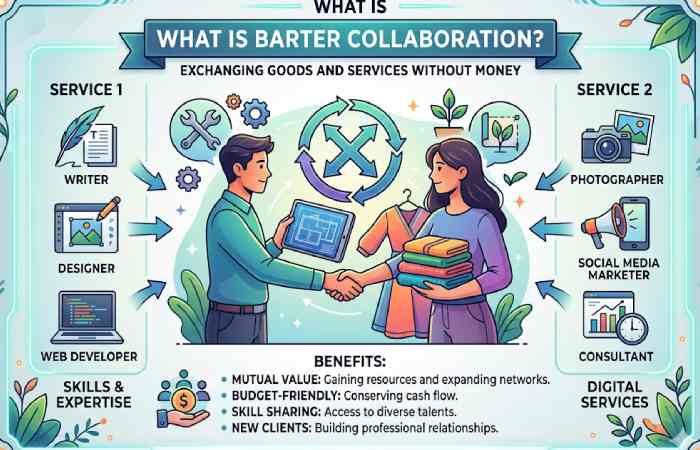
Barter collaboration (system of exchange) is an exchange- based marketing alliance in which two partners give and take value rather than money.
In creator marketing, this usually means:
- A brand provides.
- A creator advertise the brand on line.
- Both sides get access or benefits
Simple Example
A skincare company sends free products to an Instagram creator in exchange for:
- Reels
- Story posts
- Reviews
- Unboxing content
- Product mentions
The exchange is not in money but in visibility, products, and audience.
Core Elements of Barter Collaboration
| Element | Purpose |
| Product or service exchange | Alternative to payment |
| Social-media promotion | Brand visibility |
| Creator content | Marketing exposure |
| Audience engagement | Customer awareness |
| Mutual benefit | Shared growth opportunity |
Barter collaborations are more popular with startups and micro-influencers as they often have lower budgets.
How Barter Collaboration Works
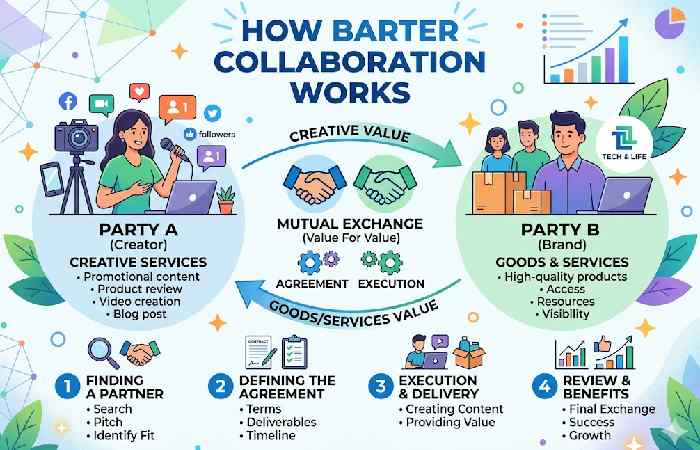
The majority of barter groupings operate on a straightforward process.
Step 1: Brand Contacts Creator
The brand spots a creator with the right audience.
Common Outreach Platforms
| Platform | Popularity in India |
| Very high | |
| YouTube | High |
| Growing | |
| TikTok-style short-video platforms | Moderate |
| Email outreach | Common |
Step 2: Product or Service Exchange Offered
The business offers an exchange.
Examples
| Brand Type | Barter Offer |
| Fashion brand | Clothing items |
| Restaurant | Complimentary meal |
| Hotel | Free stay |
| Tech company | Product review unit |
| Beauty brand | PR package |
Step 3: Promotion Agreement Created
The creator and brand usually discuss:
- Deliverables
- Number of posts
- Content style
- Deadlines
- Platform requirements
Clear communication is important.
Step 4: Content Published on Social Platforms
The creator posts promotional content such as:
- Instagram reels
- YouTube videos
- Stories
- Reviews
- Tutorials
- Lifestyle content
Step 5: Both Sides Gain Exposure or Value
The brand gains:
- Visibility
- User-generated content
- Social proof
- Audience reach
The creator gains:
- Free products
- Networking opportunities
- Portfolio development
- Brand relationships
Why Brands Use Barter Collaborations
Barter partnerships are still popular as they are inexpensive and scalable.
Lower Marketing Costs
Unlike large companies, small business don‘t have a lot of money to spend on advertising.
Barter collaborations allow brands to:
- Promote products affordably
- Test influencer marketing
- Reduce campaign risks
- Reach targeted audiences
Startup Marketing Advantage
| Traditional Ads | Barter Collaboration |
| Expensive | Lower cost |
| Broad targeting | Niche targeting |
| Limited authenticity | More creator-driven |
| Higher risk | Flexible experimentation |
Influencer Audience Reach
Creators already have communities built around:
- Fashion
- Fitness
- Gaming
- Food
- Beauty
- Technology
- Lifestyle
Brands use creators to reach the most niche audiences.
Content Generation
One biggest advantage is the user-generated content.
Content Types Businesses Receive
| Content Type | Marketing Value |
| Reels | High engagement |
| Product reviews | Consumer trust |
| Photos | Social proof |
| Tutorials | Product education |
| Stories | Quick visibility |
This material ends up being used by many companies as part of an advert.
Brand Awareness Growth
No-name brands rely on barter marketing to jump-start awareness before throwing large amounts of money into paid media.
This strategy helps:
- Build credibility
- Increase recognition
- Generate conversations
- Create organic reach
Why Influencers Accept Barter Collaborations
Not all creators look to monetize their work right away.
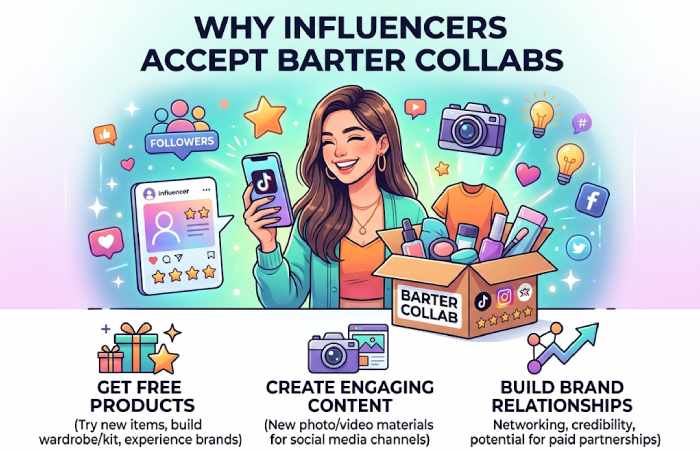
Barter deals are generally accepted by a lot of influencers as they allow them to grow in advance.
Free Products and Experiences
Creators may receive:
- Clothing
- Makeup
- Gadgets
- Hotel stays
- Restaurant invitations
- Fitness memberships
It lowers individual costs and contributes towards content production.
Portfolio Building
Smaller creators often use barter deals to:
- Build professional experience
- Create brand-focused content
- Improve media kits
- Gain social proof
Brand Relationship Development
Paid collaborations are sometimes initiated as barter collaborations.
Successful contents may result in future sponsorships.
Early-Stage Creator Growth
Micro-influencers often value exposure and networking more than earnings.
More often than not, this is largely true for smaller creators with audiences that are dedicated and active.
Why Micro-Influencers Prefer Barter Deals
Micro-influencers are one of the largest players in barter collaborations.
Reasons Micro-Creators Accept Barter Partnerships
| Reason | Benefit |
| Audience growth stage | Lower barriers to entering brand work |
| Limited sponsorship access | More opportunities |
| Portfolio development | Professional credibility |
| Networking | Future partnerships |
| Free products | Personal value |
Brands also favour micro- creators as their engagement rates tend to outperform those of the much larger influencer accounts.
Types of Barter Collaborations in India
The creator economy in India has grown and penetrated many sectors.
Popular Barter Collaboration Categories
| Industry | Common Collaboration Type |
| Fashion | Outfit promotions |
| Beauty | PR packages and reviews |
| Restaurants | Food collaborations |
| Hotels | Complimentary stays |
| Fitness | Gym memberships |
| Technology | Gadget reviews |
| Education | Course promotions |
| Cafes | Lifestyle content |
Region-specific creators and local-language influencers are gaining prominence in India.
Barter Collaboration vs Paid Collaboration
| Feature | Barter Collaboration | Paid Collaboration |
| Monetary payment | No | Yes |
| Product exchange | Yes | Optional |
| Best for small creators | Strong | Moderate |
| Campaign scale | Smaller | Larger |
| Risk for brands | Lower | Higher |
| Long-term sustainability | Limited | Stronger |
Both models are still relevant within the field of influencer marketing.
In Favor of Collaboration. Who Falls Out Most For Barter Collaborations?
Barter marketing schemes tend to suit specific groups more than others.
Main Beneficiaries
| Group | Why It Works |
| Micro-influencers | ‘More accessible to securing brand deals’ |
| Startups | Budget-friendly promotion |
| Local businesses | Hyperlocal audience targeting |
| D2C brands | Affordable awareness |
| Beginner creators | Portfolio growth |
Barter works when there‘s an even exchange of value.
Advantages of Barter Collaboration for Small Businesses
The use of barter is particularly beneficial to startups and SME, as it decreases barriers to marketing.
Business Benefits
| Benefit | Impact |
| Lower advertising costs | Budget flexibility |
| User-generated content | Authentic promotion |
| Faster brand exposure | Increased visibility |
| Niche audience targeting | Better conversion potential |
| Community engagement | Stronger trust |
Small businesses in India are primarily shifting from traditional advertising alone to rely on more and more on creator partnership.
How Small Businesses Use Instagram Barter Marketing
Instagram continues to be the hub of the India‘s barter network ecosystem.
Common Instagram Collaboration Formats
| Format | Purpose |
| Reels | Product discovery |
| Stories | Quick promotions |
| Unboxing videos | Audience engagement |
| Before-and-after content | Demonstration |
| Lifestyle integration | Authentic branding |
The simple, visual format of Instagram is very scalable for barter marketing.
Common Problems in Barter Collaborations
Not all collaborations succeed.
Sometimes the issues are created by the fact that communication has not been excellent or the client has inappropriate expectations.
Common Challenges
| Problem | Why It Happens |
| Unclear deliverables | No written agreement |
| Fake engagement | Influencer fraud |
| Poor-quality content | Low creator effort |
| Delayed posting | Weak communication |
| Unbalanced exchange | Value mismatch |
It‘s become clear that both brands and creators need to think very carefully about partnerships.
Barter Collaboration Red Flags Brands Should Avoid
Businesses should avoid creators who:
- Have fake followers
- Show low engagement authenticity
- Ignore communication
- Deliver inconsistent content
- Refuse transparency
Important Evaluation Metrics
| Metric | Why It Matters |
| Engagement rate | Audience quality |
| Audience relevance | Better targeting |
| Content consistency | Brand alignment |
| Communication quality | Campaign reliability |
Just knowing numbers of followers is no longer sufficient.
Mistakes Creators Make During Brand Collaborations
Groups of creators also makes mistakes on the barter campaign.
Common Creator Mistakes
| Mistake | Negative Result |
| Accepting irrelevant brands | Audience disconnect |
| Overpromoting products | Reduced trust |
| Missing deadlines | Damaged reputation |
| Ignoring disclosure rules | Legal concerns |
| Producing low-effort content | Fewer future deals |
Professionalism carries through to even unpaid projects.
How to Create a Successful Barter Collaboration Agreement
Definite agreements contribute immensely to better results.
Important Agreement Elements
| Element | Why It’s Important |
| Deliverables | Defines expectations |
| Posting deadlines | Prevents delays |
| Usage rights | Clarifies ownership |
| Story/reel count | Measures output |
| Brand guidelines | Maintains consistency |
Informal collaborations require just as much written communication.
How Social Media Platforms Changed Barter Marketing
The social platforms had a global transformation to the influencer marketing.
Platform Impact on Barter Collaboration
| Platform | Major Influence |
| Visual creator economy | |
| YouTube | Long-form product reviews |
| Professional collaborations | |
| Short-video apps | Viral discoverability |
The rise of reels and short-form content sped-up barter marketing immensly.
The Growth of Influencer Marketing in India
India has emerged as one of the most rapidly developing influencer-marketing ecosystems in the world today.
Key Growth Drivers
| Trend | Impact |
| D2C startup growth | More brand collaborations |
| Regional-language creators | Localized reach |
| Smartphone penetration | Larger audiences |
| Affordable internet access | Social-media expansion |
| Creator economy growth | More influencers |
The regional creator ecosystem of India is even more crucial given the rise of vernacular content consumption.
What is Barter Collaboration Good for?
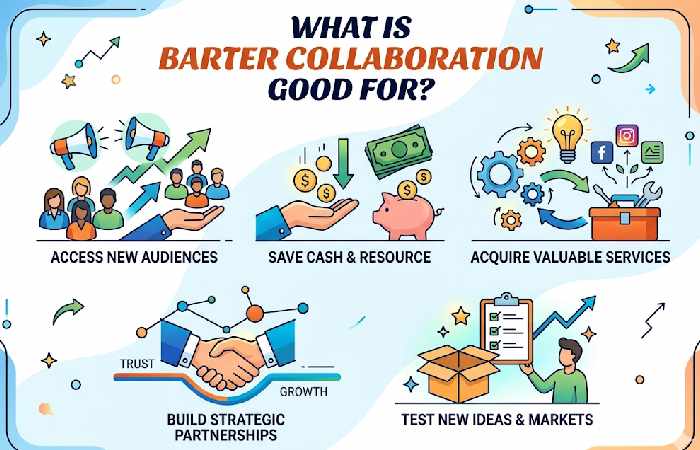
What isn‘t the same is where the brand sits in relation to the creator‘s place in his or her own field.
When Barter Collaboration Makes Sense
| Situation | Why It Works |
| Beginner creators | Portfolio growth |
| Startup brands | Lower marketing costs |
| Local businesses | Community visibility |
| Product launches | Initial awareness |
When It May Not Be Ideal
Barter collaborations become less sustainable when:
- Already have audience value
- Brands expect excessive deliverables
- The value of a product is too small
- Campaign expectations become unrealistic
The only exception is the professional creator who eventually is ready to move towards paid collaborations.
Legal and Ethical Considerations in Barter Collaborations
Transparency is very significant in the sector of influencer marketing.
Important Legal Considerations
| Issue | Why It Matters |
| #Ad disclosure | Consumer transparency |
| Content ownership | Rights management |
| Sponsored visibility | Audience trust |
| Tax implications | Financial compliance |
The creators should always disclose the promotional relationships clearly because it will keep up the trust with audience and comply with the platform‘s policies.
Tools Commonly Used for Influencer Collaborations
Influencer Marketing Platforms
| Platform | Purpose | Pricing | Official Website |
| Upfluence | Influencer discovery | Enterprise pricing | Creator campaigns |
| Aspire | Influencer collaboration management | Custom pricing | Brand partnerships |
| CreatorIQ | Creator marketing platform | Enterprise pricing | Campaign analytics |
| Canva | Content creation | Free + Pro plans | Social-media design |
| Later | Social-media scheduling | Free + premium plans | Instagram planning |
Frequently Asked Questions
What is barter collaboration?
What is barter collaboration? It is cooperation between brands and creators through trading products, services or exposure.
Is barter co-operation valid in India?
Yes. On the whole, bartering does not seem to be outlawed so long as both vendors abide by requirements around advertising disclosure and platform policy.
Are influencers compensated in barter collabs?
Between generally no direct payment is made. An influencer may be compensated with products, services, experiences, or simply exposure.
What do brands get from barter deals?
To lower marketing expenses, produce content and enhance the visibility within the targeted consumer segment, the brands use barter programs.
Barter cooperation, is this good for newbies?
Yes. Some of the populations it is most widespread in are emerging creator, micro-influencer, startup and small business.
Final Thoughts
Barter collaboration India is an attempt to capture the emerging space of influencer marketing, startup branding, creator-economy collaborations in social-media business paradigm, where value, benefit, value-addition between the creator and the brand is exchanged as products, services, access to audiences and digital presence.
With the growth of India‘s creator economy across Instagram, YouTube and short form video feeds, barter marketing an easy entry point to grow with startups, small businesses and aspiring creators seeking footholds has taken hold.
Barter collaborations are no longer just “free product exchanges” for most brands and creators. They have become a people-to-people marketing model inwhich brands and creators develop relationships focused on earned audience trust, social proof, content creation, and ongoing digital partnerships.